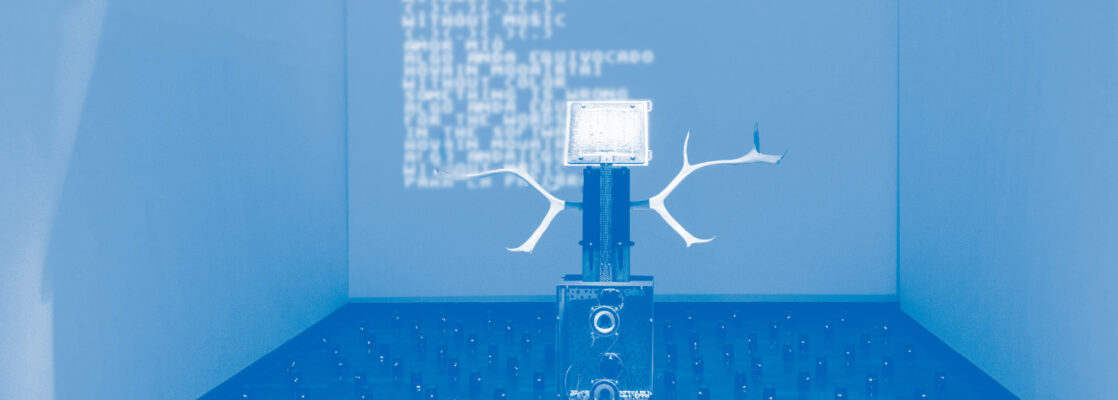
Exposiciones Contemporáneo
El pensamiento es un jardín hibrido. El archivo Mariotti – Luy (1964-2024)
Publicado el: 28/11/2025
- Fecha: 29/11/2025
- Hora: 10:00
- Lugar: Salas 1 y 2 en el primer piso del Museo de Arte de Lima - MALI y salas 1 y 2 del Museo de Arte Contemporaneo - MAC Lima
El pensamiento es un jardín híbrido presenta seis décadas de labor artística y cultural de Francesco Mariotti (Berna, Suiza, 1943) y María Luy (Puerto Maldonado, Perú, 1950), revelando una obra pionera que entrelaza tecnología, colectividad, naturaleza y compromiso social. Desplegada en las salas del Museo de Arte de Lima – MALI y del Museo de Arte Contemporáneo – MAC, la exposición propone una amplia mirada al Archivo Mariotti-Luy que se encuentra en comodato en el MALI. Este archivo contiene documentación histórica (fotografías, recortes de periódico, revistas, afiches, películas, y otros materiales) desde los años sesenta hasta el presente sobre varios momentos clave de la producción cultural local e internacional. Junto a estos documentos, se exhiben numerosas obras que reconstruyen la trayectoria de ambos artistas entre Perú y Europa.
La exposición toma como punto de partida el concepto de lo híbrido, el cual ha sido un eje central en la producción artística y cultural de ambos artistas. Para Mariotti, lo híbrido no es una simple mezcla de elementos, sino una forma compleja de existencia que integra componentes aparentemente opuestos, como la tecnología y la naturaleza. El concepto deriva de sus instalaciones llamadas Jardines híbridos (o Jardines cuánticos), donde convergen elementos distintos. Para el artista, lo híbrido está asociado al plástico, la basura y el consumo, e igualmente a la magia, la poesía y el arte. Es artificial y natural, orgánico y sintético. Es decir, se trata de una práctica de resistencia y de transformación.
En un momento en que la inteligencia artificial plantea nuevos desafíos sobre la relación entre humanidad, tecnología y naturaleza, esta exposición ofrece una mirada cercana a varios desarrollos pioneros en este campo. Presentamos obras nunca antes exhibidas en Perú que proponen experiencias multisensoriales y luminosas. Aquellos trabajos tempranos anuncian el desarrollo de inteligencias artificiales que emergen en diálogo con diversas tradiciones culturales y cosmovisiones, desde el dadaísmo hasta los mitos amazónicos. La exposición también incorpora un trabajo de gestión cultural que ha sido el motor de la prolífica producción creativa de Francesco Mariotti y María Luy.
Miguel A. López y José-Carlos Mariátegui
Curadores / Curators
SECCIONES MALI
1: ME VOY A BUSCAR QUIEN SOY
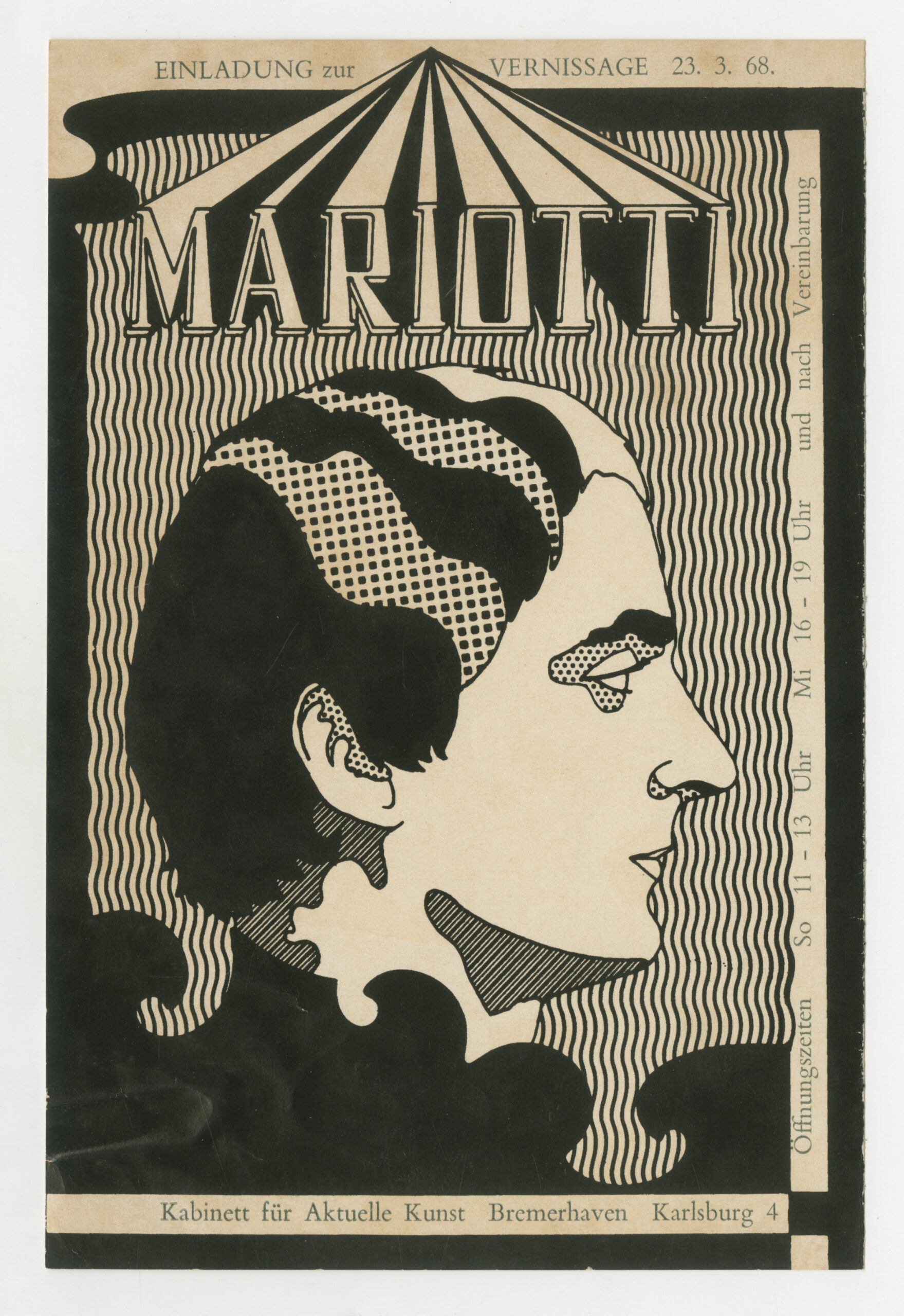
La trayectoria artística de Francesco Mariotti, desde sus años formativos, se desarrolló entre Suiza y Perú. Tras pasar su juventud en Perú, estudió en la Academia de Bellas Artes de Hamburgo entre 1964 y 1968. Su obra temprana refleja procesos sociales y políticos de la época, así como la influencia del debate intelectual de los años sesenta y el impacto de la Revolución Cubana de 1959. En sus trabajos posteriores se advierte una indagación que interroga las formas de representación convencionales. Su participación en Cruizin’4 en 1967 subrayó su interés por los procesos colaborativos que definieron sus intervenciones artísticas posteriores.
2: TEMPLOS DE LUZ Y MULTISENSORIALIDAD
Mariotti colaboró con Klaus Geldmacher en el Proyecto Geldmacher-Mariotti, presentado en la Documenta 4 de Kassel en 1968. Esta obra monumental consistió en una estructura cúbica metálica iluminada, diseñada como un espacio multisensorial. En 1969, presentó El movimiento circular de la luz en la X Bienal de São Paulo, que posteriormente fue exhibida en Art Basel (1970) y en la VII Feria Internacional del Pacífico en Lima (1971), la cual fue pionera en su manera de concebir una experiencia artística inmersiva. Esta pieza marcó su regreso al Perú.
3: PARTICIPACIÓN Y ARTE TOTAL
En 1971, Mariotti coorganizó Contacta, un Festival de Arte Total en el Parque Neptuno de Lima, que cuestionaba las formas convencionales del arte y sus circuitos restringidos. El evento promovió manifestaciones artísticas populares y masivas, integrando expresiones de diversos grupos sociales. La segunda edición, Contacta (1972), contó con el respaldo de SINAMOS del Gobierno Revolucionario de las Fuerzas Armadas. En septiembre de 1972, Mariotti se trasladó al Cusco como jefe de difusión de ORAMS VII, impulsando proyectos significativos como el semanario Chaski y los Festivales Inkari y Hatariy. Desarrolló obras centradas en los tocapus incas como sistemas de comunicación. En 1979, a su regreso a Lima, participó en la organización de una nueva edición de Contacta en Barranco.
4: OH CULTURA! (RECICLAJES Y REGISTROS)
A inicios de los ochenta, María Luy, Francesco Mariotti, Charo Noriega, Herbert Rodríguez, Juan Javier Salazar, Mariela Zevallos y Armando Williams conformaron E.P.S. Huayco (1980-1981), grupo caracterizado por la aproximación social al arte usando materiales reciclados. Su obra emblemática fue la monumental imagen de Sarita Colonia con latas recicladas instalada en una duna frente a la Panamericana Sur en 1981. Paralelamente, Mariotti exploraba materiales cotidianos en obras como Pan Francés (1978) o Kapinguri (1979), presentadas en “Reciclaje” (Galería Camino Brent, 1980). Estos ensamblajes desafiaban las expectativas de eternidad del arte burgués mediante la resignificación de los residuos.
5: PRINT ATELIER, VIDEOARTE Y DIVAGACIONES ZOOMORFAS
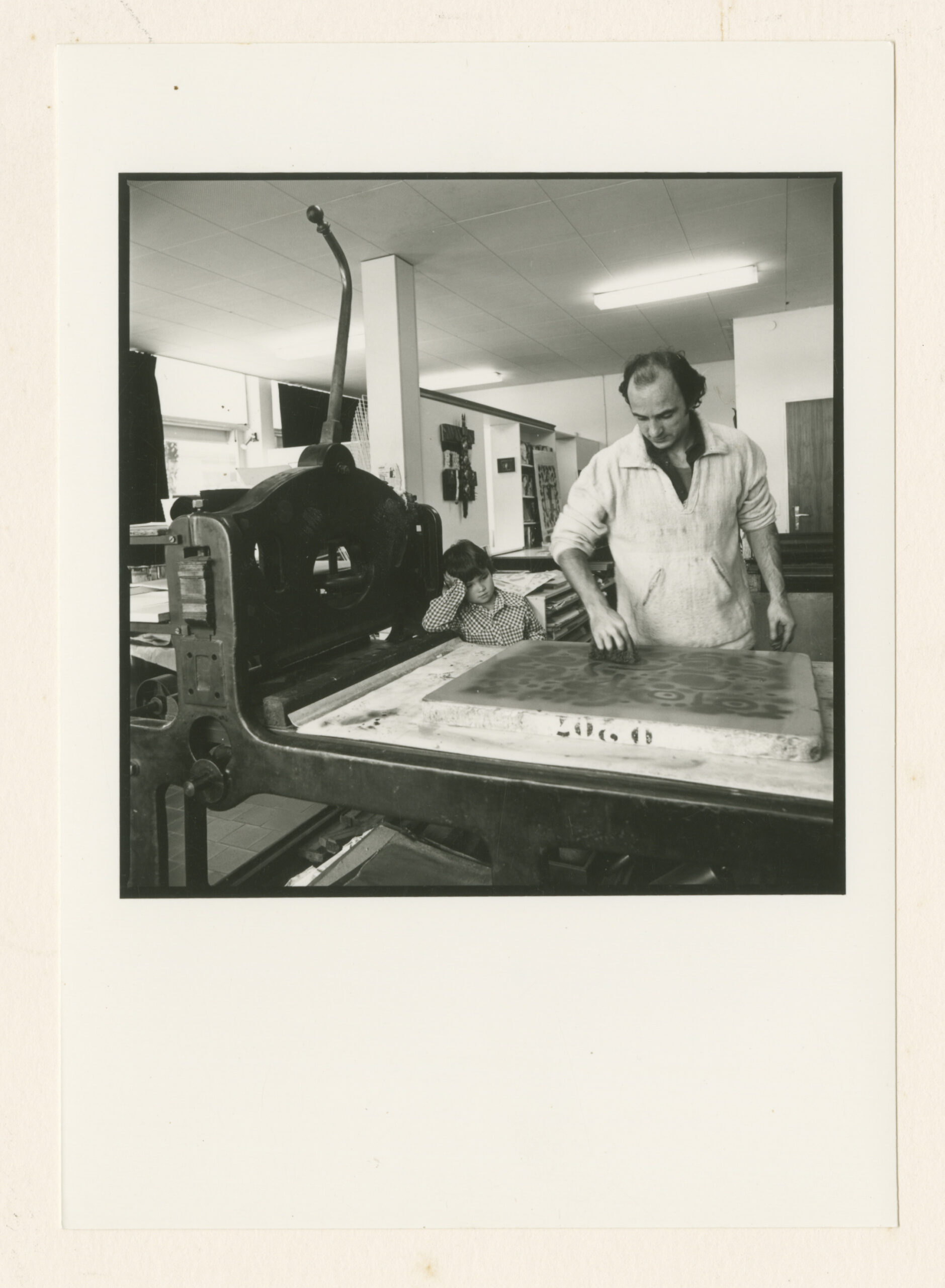
En 1981, la familia Mariotti-Luy se estableció en Locarno, Suiza, donde Mariotti colaboró con Rinaldo Vianda en la Galleria Flaviana. Allí dirigió talleres gráficos y desarrolló experimentos gráficos y audiovisuales. Creó la serie Videoretratos (1982), exploración innovadora que fusiona fotografía, video y arte gráfico, y participó activamente en VideoArt Festival Locarno. Obras destacadas incluyen Big Chief (1983) y esculturas zoomorfas con Klaus Geldmacher integrando materiales industriales, sensores y computadoras. Estas investigaciones anticipan su reflexión sobre la relación entre lo natural y lo artificial.
6: TECNOESCULTURAS
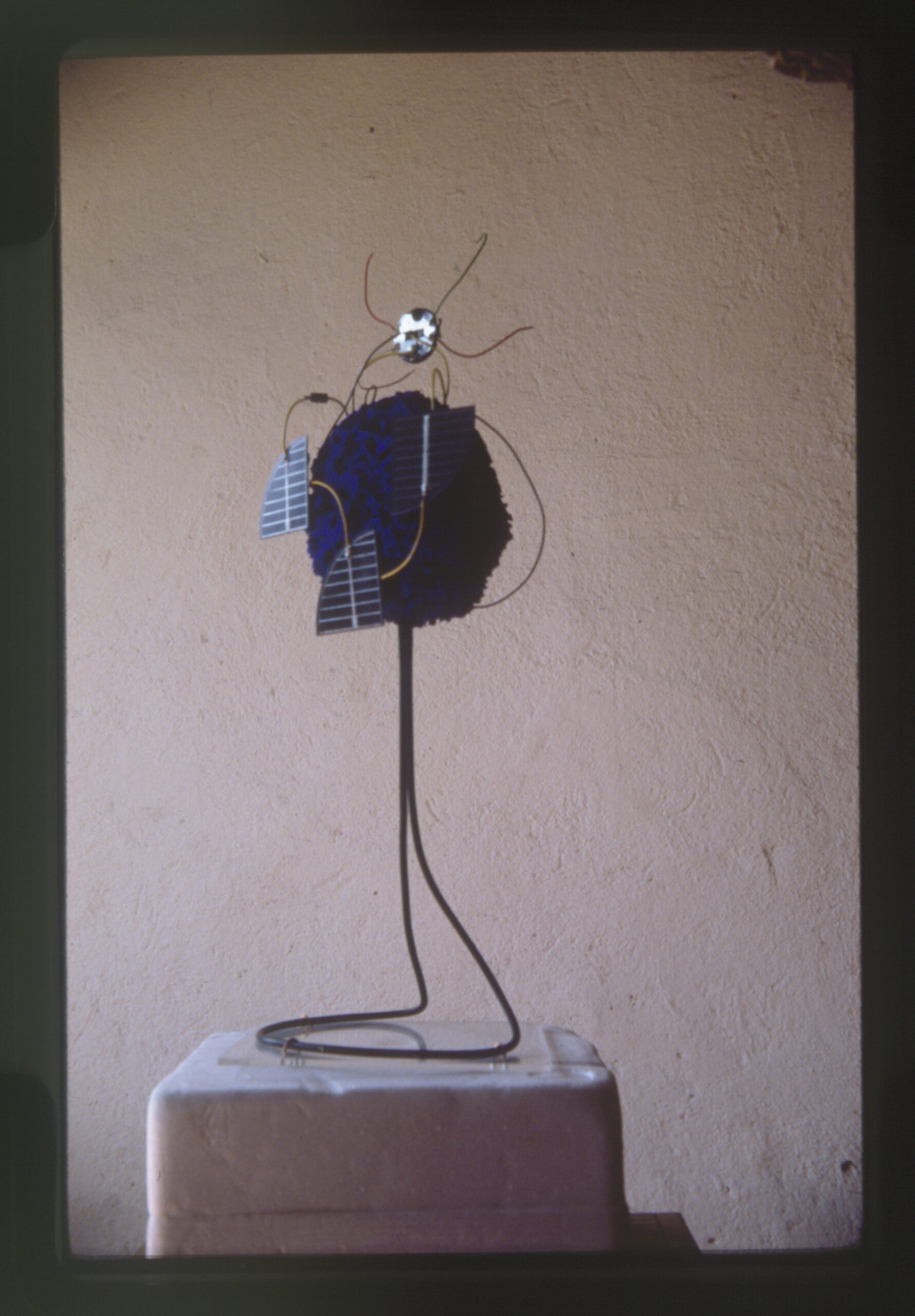
A mediados de los ochenta, Mariotti desarrolló esculturas que combinaban elementos tecnológicos con formas animales. Colaboró con el programador Manolo Rodríguez en el desarrollo de Chullachaqui 5, un programa experimental de procesamiento aleatorio de textos y sonidos. Esto originó obras interactivas inspiradas en mitologías amazónicas, como Rana (1987), una escultura con voz sintetizada que recita poesía. Durante los noventa, colaboró nuevamente con Geldmacher en Das Glühwürmchen Projekt (1989), incluyendo esculturas solares y experimentación biotecnológica. Sus tecnoesculturas incorporan reflexiones sobre ecología, espiritualidad y memoria colectiva, destacando Gran guacamayo precolombino (1992), Femme Fatale (1996) y Templo de las Luciérnagas (1996).
7: JARDINES HÍBRIDOS Y MEMORIALES POR LAS LUCHAS MEDIOAMBIENTALES
Desde mediados de los noventa, Mariotti desarrolló las series Jardines híbridos y Jardines cuánticos: instalaciones con materiales heterogéneos —plásticos reciclados, botellas PET y luces LED— construyendo hábitats naturales y artificiales. La luciérnaga se convirtió en símbolo central, cuya bioluminiscencia es un indicador de ecosistemas sanos. Estas instalaciones articulan una crítica a la devastación ambiental y a la lógica depredadora urbana, imaginando modelos alternativos de convivencia. Proyectos recientes abordan la migración, la alimentación y la lucha medioambiental, como Tomatl (2009) que reflexiona sobre biodiversidad versus monocultivo. La serie Firefly Memorial (2017-presente) trata sobre la persecución de defensores medioambientales a nivel mundial.
SECCIONES MAC LIMA
1: PROTOTIPOS, MÚLTIPLES Y ECONOMÍA PARTICIPATIVA
Esta sección reúne fotografías, estampillas, prototipos y objetos múltiples producidos entre 1968 y 2015, que reflejan el interés de Mariotti por crear objetos seriados de escala y costo accesibles. La producción en serie respondía a la investigación estética y tecnológica, cuestionando las dinámicas tradicionales del mercado del arte. G-M-Aktie (1968), con Klaus Geldmacher, es una múltiple de 100 unidades que convierte a cada comprador en accionista del 1% de la instalación de Documenta 4, redistribuyendo valor artístico como bien colectivo. Mariotti sostuvo esta práctica como una herramienta crítica de diseminación artística, alineándose con la economía participativa, los bienes comunes y los modelos cooperativos descentralizados.
2: PRINT ATELIER, VIDEOARTE Y DIVAGACIONES ZOOMORFAS
En 1981, la familia Mariotti-Luy se trasladó a Locarno, Suiza, y colaboró con Rinaldo Vianda en la Galleria Flaviana. Mariotti dirigió talleres gráficos desarrollando experimentos gráficos y audiovisuales. Creó la serie Videoretratos (1982), exploración innovadora que fusiona fotografía, video y arte gráfico, y participó activamente en VideoArt Festival Locarno. Obras destacadas incluyen esculturas zoomorfas que integran materiales industriales, sensores y computadoras. Se incluye también una serie de postales realizadas por Luy en 1982, mezclando dibujos realizados por sus hijas, fotografías de prensa de la guerra del Líbano y el rol del arte en las luchas anticoloniales.
3: LAS TRES MITADES DE INO-MOXO
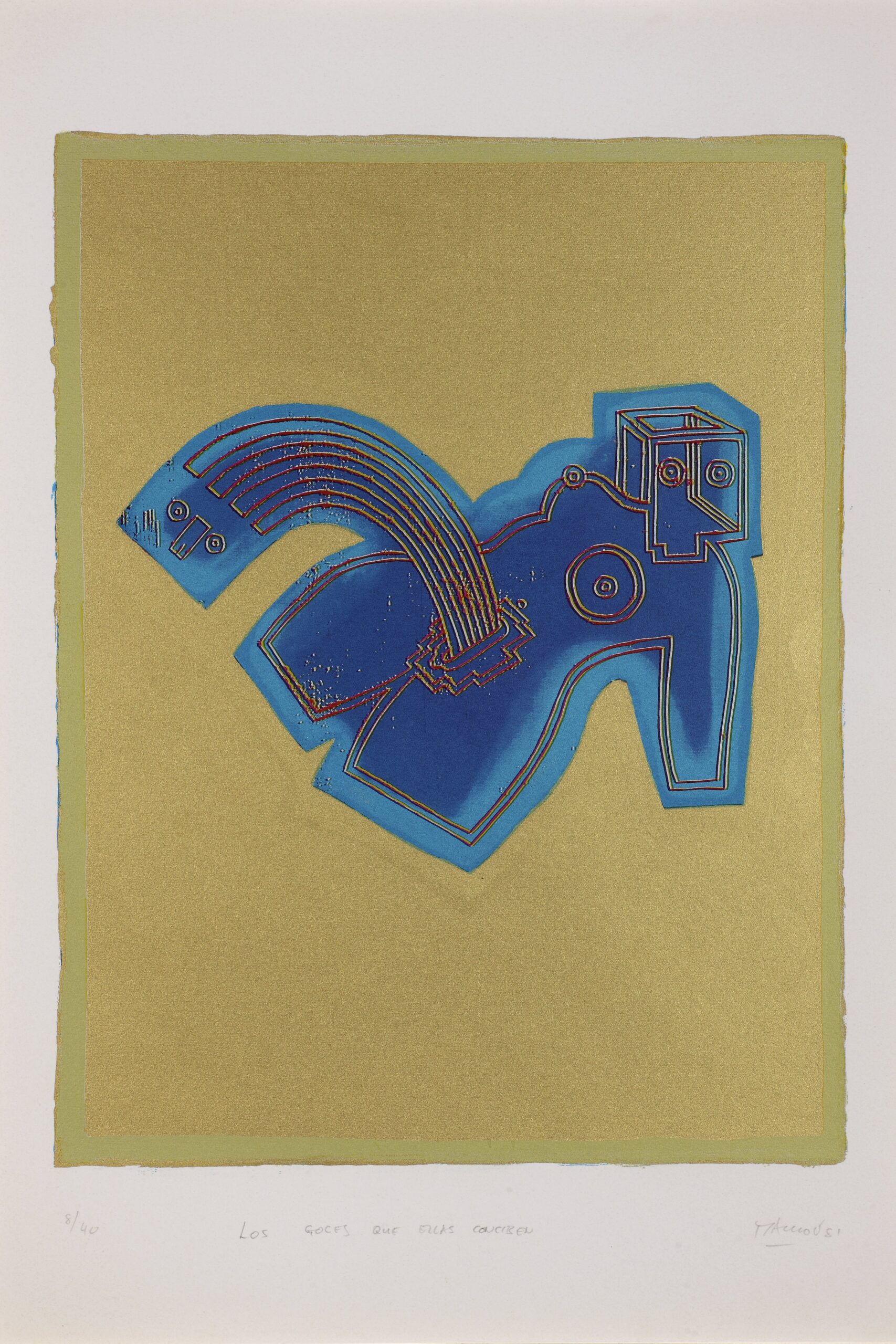
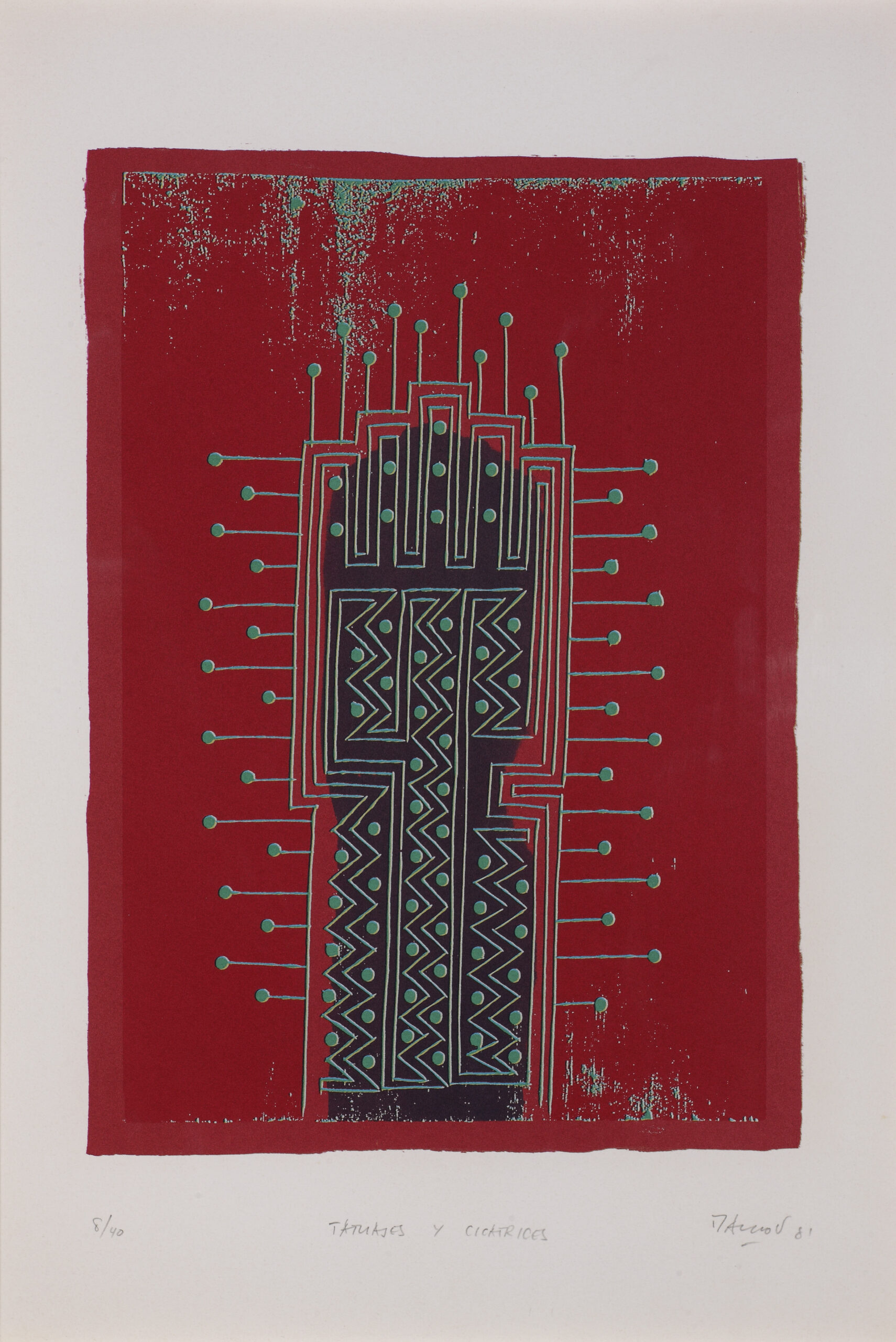
Las tres mitades de Ino Moxo (1981) fue realizada en Locarno como acompañamiento visual a la novela homónima del poeta César Calvo. La invitación a ilustrar esta narración de visiones chamánicas con el curandero amazónico don Manuel Córdoba Ríos originó una obra que entrelazaba motivos asháninka con circuitos electrónicos. El resultado es un lenguaje visual híbrido que converge saberes ancestrales con tecnología occidental. Se incluyen también esculturas lumínicas recientes que abordan lo amazónico desde la lucha medioambiental, en respuesta al asesinato de defensores de la tierra y del agua.
4: LIBRERÍA EL CÓNDOR
La Librería El Cóndor fue un proyecto cultural de María Luy tras su mudanza a Suiza. Fundada en 1983 en Locarno, a finales de 1986 se trasladó a Zurich, donde operó hasta 2020. Especializada en literatura hispanoamericana, se consolidó como un espacio de referencia para la cultura latinoamericana en Europa. Funcionó como plataforma activa: Luy organizó presentaciones, debates y actividades comunitarias, fortaleciendo el diálogo entre grupos migrantes y el contexto suizo. Promovió proyectos participativos como La pobreza según mis vecinos en 400 metros (2004), indagación sobre percepciones de pobreza entre comunidades sociales cercanas. La iniciativa reflejaba el carácter político del proyecto, que buscaba promover el encuentro y la reflexión colectiva.




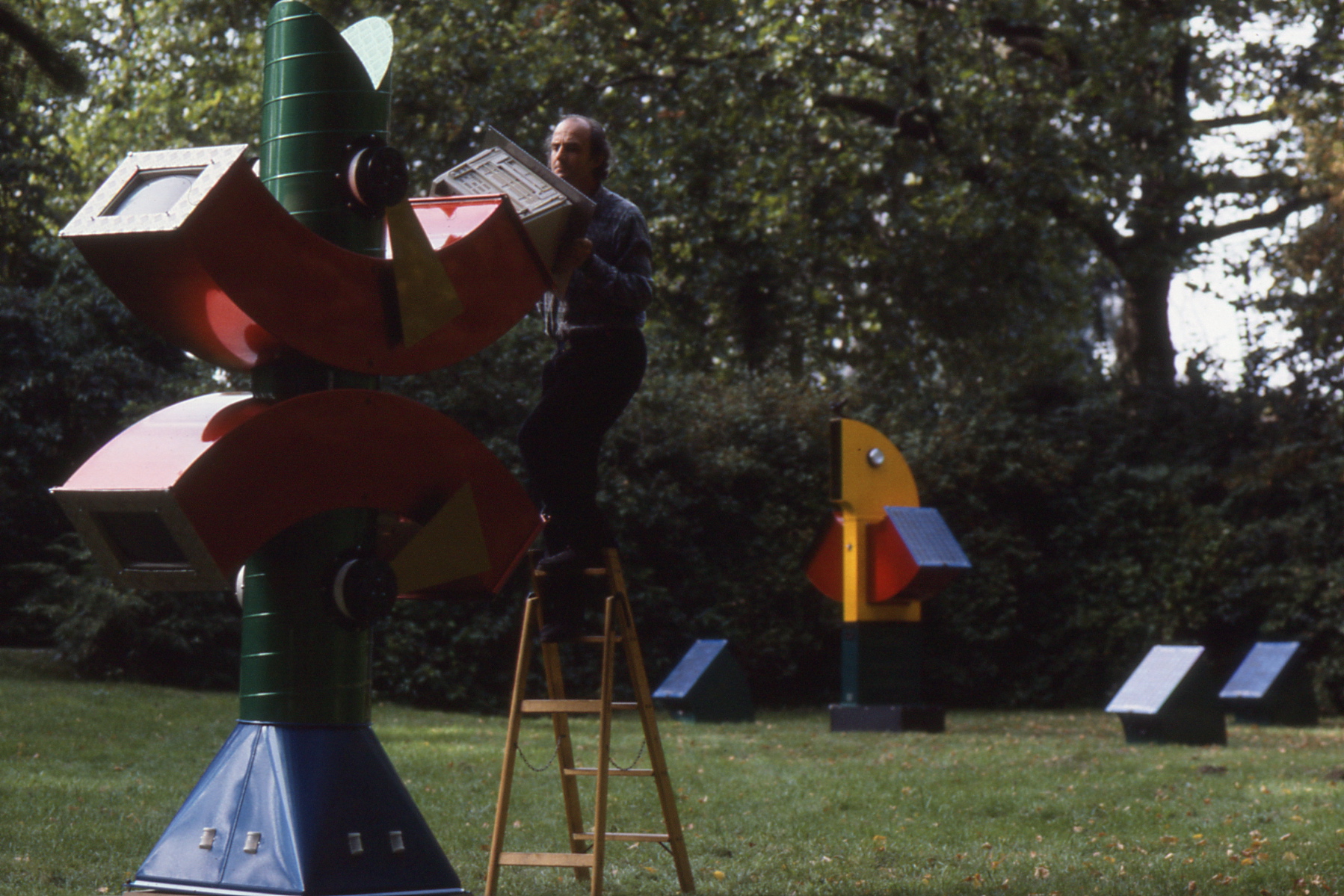
Thinking is a Hybrid Garden showcases six decades of artistic and cultural work by Francesco Mariotti (Bern, Switzerland, 1943) and María Luy (Puerto Maldonado, Peru, 1950), revealing a pioneering body of work that intertwines technology, collectivity, nature, and social commitment. Spread across the galleries of the Museo de Arte de Lima – MALI and the Museo de Arte Contemporáneo de Lima – MAC Lima, this exhibition provides a comprehensive overview on the Mariotti – Luy Archive, currently on loan to MALI. This archive contains historical documentation (photographs, newspaper clippings, magazines, posters, films, and other materials) spanning from the 1960s to the present, covering key moments in both local and international cultural production. Alongside these documents, numerous artworks trace the trajectory of both artists between Peru and Europe.
The exhibition takes as its point of departure the concept of the hybrid, a central theme in the artistic and cultural production of both artists. For Mariotti, the hybrid is not merely a mixture of elements, but rather a complex form of existence that integrates seemingly opposing components, such as technology and nature. The concept derives from his installations known as Hybrid Gardens (or Quantum Gardens), in which distinct elements converge. For the artist, the hybrid is linked to plastic, waste, and consumer culture, as well as to magic, poetry, and art. It is both artificial and natural, and both organic and synthetic. In other words, it embodies a practice of resistance and transformation.
At a time when artificial intelligence (AI) poses new challenges regarding the relationship between humanity, technology, and nature, this exhibition offers a close look at several pioneering developments in this field. We present works that have never before been exhibited in Peru, offering multisensory and luminous experiences. These early projects foreshadow the evolution of artificial intelligences emerging in dialogue with diverse cultural traditions and worldviews, from Dadaism to Amazonian mythologies. The exhibition also highlights cultural management work that has been the driving force behind the prolific creative production of Francesco Mariotti and María Luy.
Miguel A. López y José-Carlos Mariátegui
Curators
MALI SECTIONS
SECTION 1: I’M GOING TO FIND WHO I AM
This section brings together the early artistic explorations of Francesco Mariotti, created during his years as a student. Born in Bern, Switzerland, Mariotti spent an important part of his childhood and adolescence in Peru due to family circumstances. At sixteen, he left Lima to study at the Academy of Fine Arts in Hamburg (1964–1968). Many of the works presented here reflect the social and political processes that shaped cultural debates in the 1960s, among them the triumph of the Cuban Revolution in 1959, which inspired currents of change throughout Latin America, Europe, and other regions of the world.
Memories and recollections of Peru emerge in several of these pieces, whether through sequences of flags or through the repetition of the word “UREP” (Peru spelled backwards). Within them, one observes a progression from early figurative experiments to a pop and psychedelic abstraction, which eventually develops into luminous and interactive installations—thus anticipating the artist’s later work with technology. A significant moment of this period was his participation in the Cruizin’4 collective in 1967, which underscores his interest in collaborative processes, a constant that would go on to define many of his later interventions in Peru.
SECTION 2: TEMPLES OF LIGHT AND MULTISENSORIALITY
Mariotti collaborated with Klaus Geldmacher creating the Geldmacher-Mariotti Project, presented at Documenta 4 in Kassel in 1968, one of the most important events in the international art world. The work consisted of a monumental illuminated metal cube equipped with multiple loudspeakers and a large industrial fan. This multisensory space also functioned as a gathering place for collective activities and discussions.
One year later, in 1969, Mariotti presented The Circular Movement of Light at the 10th São Paulo Biennial, a work influenced by Hindu thought. It consisted of a penetrable structure that challenged Western modes of visual perception, inviting an immersive sensory experience through programmed sequences of color, fragrances, temperature, and sound frequencies. This piece was later exhibited at Art Basel (1970) and at the VII Feria Internacional del Pacífico in Lima (1971).
This phase also marks his return to Peru, where he began developing collaborative projects. Among them are the stained-glass windows of the Chapel of the Home for Girls in Puente Piedra, created together with María Luy; Triptych of the Sun, the Arch of the Sky, and the Moon (1972), in collaboration with Víctor Delfín for the Coltejer Biennial; and the ambitious project The Tower of Truth (1972) conceived for the Center for Art and Communication (CAYC) in Buenos Aires.
SECTION 3: PARTICIPATION AND TOTAL ART
In 1971, Mariotti, together with Luis Arias Vera, organized Contacta in Parque Neptuno in Lima: a Total Art Festival that questioned conventional forms of art and culture and their restricted circuits of circulation. Contacta promoted a gathering of massive, popular artistic expressions, with the aim of fostering the integration of artistic forms from diverse groups and social classes. The festival held a second edition in 1972, this time with the backing of the National System of Support for Social Mobilization (SINAMOS) of the Revolutionary Government of the Armed Forces (1968–1975).
In September 1972, the married couple Mariotti–Luy moved to Cusco, where Mariotti worked as head of communications for the Seventh Regional Office of Support for Social Mobilization (ORAMS VII) under SINAMOS. From this position, he promoted significant cultural projects such as the weekly newspaper Chaski and the Inkari and Hatariy festivals, which proposed an innovative model of social participation and cultural celebration rooted in rural and Indigenous identities. In Cusco, Mariotti developed a series of works centered on aesthetic forms from Andean traditions, focusing particularly on Inca tocapus—geometric designs he investigated as communication systems. Upon his return to Lima in 1979, he took part in organizing a new edition of Contacta in the Barranco district.
SECTION 4: OH CULTURE! (RECYCLING AND RECORDS)
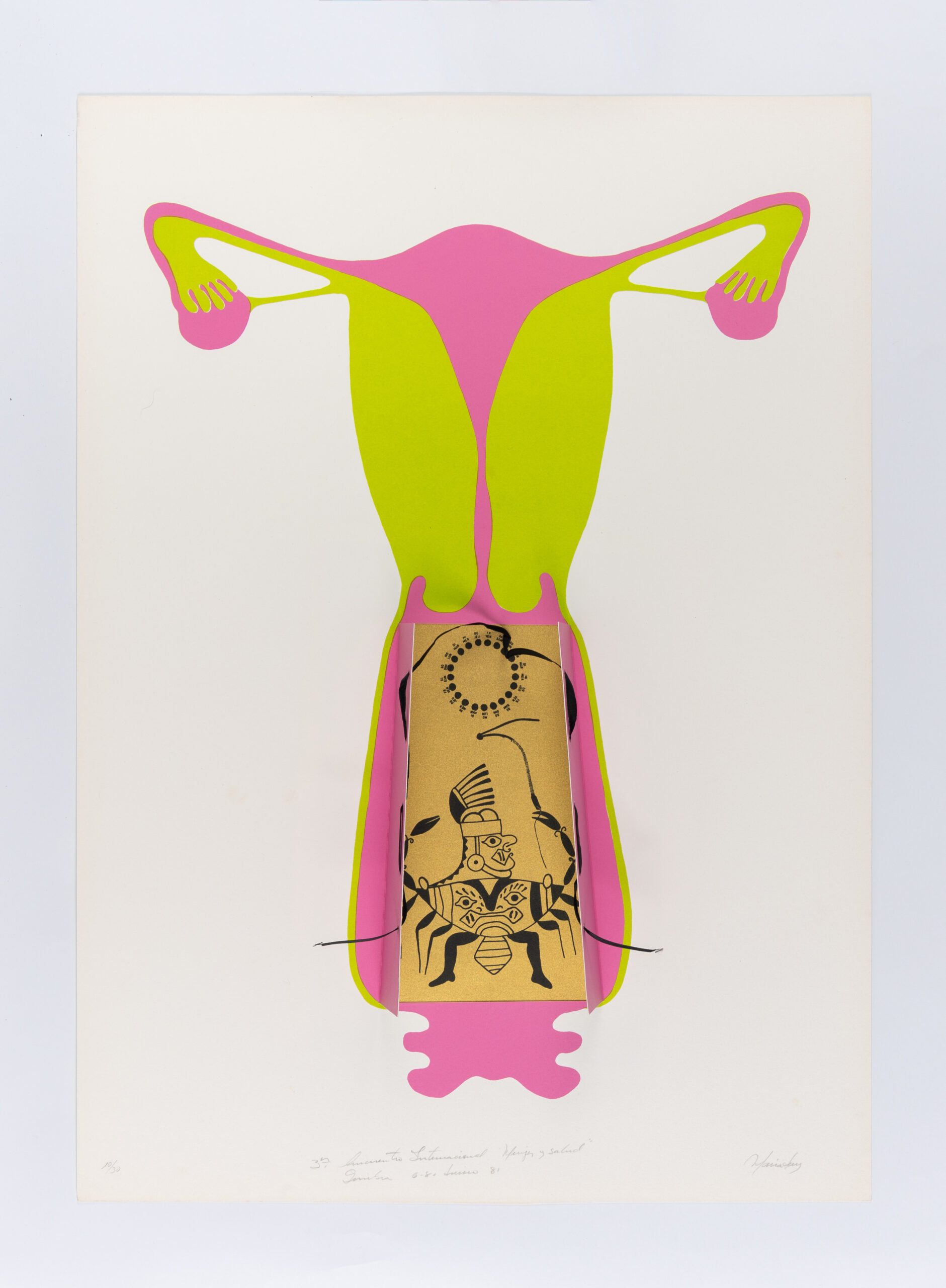
In the early 1980s, Luy and Mariotti, together with Charo Noriega, Herbert Rodríguez, Juan Javier Salazar, Armando Williams, and Mariela Zevallos, formed the group E.P.S. Huayco (1980–1981), characterized by a socially driven approach to art that made use of recycled materials and re-signified urban and popular icons. Their emblematic work from this period was a monumental image of Sarita Colonia, made from recycled cans and installed on a sand dune facing the Pan-American Highway South in 1981. A significant silkscreen from that time was Oh Cultura (1980) by Luy, which reflects the group’s shared interest in questioning the hierarchies of cultural objects and articulating a social critique through visual language.
In parallel, Mariotti explored everyday materials in works such as Pan Francés (1978) and Kapinguri (1979), presented in his exhibition “Reciclaje” (Galería Camino Brent, 1980). These assemblages incorporate plaster-covered bread combined with everyday materials—wooden pallets, beer crates, chicken feathers, knives—forming a sculptural language that redefined discarded objects. The use of the popular french bread roll coated in plaster challenged expectations of the artwork’s permanence and bourgeois taste.
SECTION 5: PRINT ATELIER, VIDEO ART, AND ZOOMORPHIC RAMBLINGS
In 1981, the Mariotti – Luy family moved to Locarno, Switzerland, where they began a collaboration with Rinaldo Bianda, founder of the Galleria Flaviana, where Mariotti directed the print workshops for several years. In this context, both artists developed graphic and audiovisual experiments. Mariotti created the series Video-portraits (1982), an innovative exploration that fused photography, video, and graphic art. He also participated actively in the VideoArt Festival Locarno. Luy produced playful prints and paintings that addressed social and gender-related themes.
Other notable works by Mariotti include Karl Marx Sings and Dances for You The Internationale (1984), a multiple that combines mechanical and sound elements; Big Chief (1983), a totemic sculpture responding to changes in the industrial and social landscape of Locarno; and a series of zoomorphic sculptures created with Klaus Geldmacher, which integrated industrial materials, sensors, and computers.
SECTION 6: TECHNOSCULPTURES
In the mid-1980s, Mariotti began a series of sculptures that fused technological components with animal forms, deepening his reflection on the relationship between the natural and the artificial. His collaboration with programmer Manolo Rodríguez was key, especially in the development of Chullachaqui 5, an experimental program capable of processing texts and sounds randomly. This project gave rise to interactive works inspired by Amazonian mythologies, such as Rana (1987), a zoomorphic sculpture equipped with a computer-synthesized voice that recites poetry.
During the 1990s, Mariotti continued his long-standing collaboration with Klaus Geldmacher, initiated in the 1960s. In 1989, they jointly launched Das Glühwürmchen Projekt (The Firefly Project), which involved the fabrication of solar sculptures and biotechnological experimentation. In this phase, Mariotti’s techno-sculptures incorporated reflections on ecology, spirituality, and collective memory as evident in works such as Gran Guacamayo Precolombino (1992) – installed in the museum’s lobby – Super Lucciola, Femme Fatale (1996) – installed in gallery 1A – and Templo de las Luciérnagas – Highway R(u)hin-Autopista r(u)hin(a) (1994).
In 1996, Mariotti presented the exhibition “The Return of the Fireflies” at the Museo de Arte de Lima, bringing together a representative selection of his technological and aesthetic research from those years.
SECTION 7: HYBRID GARDENS AND MEMORIALS FOR ENVIRONMENTAL STRUGGLES
Since the mid-1990s, Mariotti has been developing his Hybrid Gardens and Quantum Gardens series, installations that combine heterogeneous materials, such as recycled plastics, colored PET bottles, and LED lights, to construct habitats that are simultaneously natural and artificial. The firefly thus became a central symbol in his reflection and work, not only for its ability to transform chemical energy into light (bioluminescence), but also for it serves as an indicator of healthy, undisturbed ecosystems. Through these installations, Mariotti articulates a critique of environmental devastation and the predatory, extractive logic of urban life, while imagining alternative models of coexistence.
In recent decades, his work has explored themes of migration, food systems, territory, and environmental struggle. Tomatl (2009) takes the tomato—a plant of Mesoamerican origin—as its point of departure to reflect on tensions between biodiversity and monoculture, as well as processes of domestication, hybridization, and displacement. Firefly Memorial (2017–present) is a long-term project created in response to the persecution and assassination of defenders of land and water who have been targets of violence for resisting the exploitation of their territories.
MAC LIMA SECTIONS
SECTION 1: PROTOTYPES, MULTIPLES, AND PARTICIPATORY ECONOMY
This section brings together photographs, stamps, prototypes, and multiple objects produced by Francesco Mariotti between 1968 and 2015. These pieces reflect his interest in creating serialized objects of accessible scale and cost, in continuity with his work in printmaking and other forms of technical reproduction. Serial production was not only an aesthetic and technological inquiry, but also an attempt to escape the traditional dynamics of the art market, marked by exclusivity and speculation. One of the most emblematic examples of this approach was G-M-Aktie (1968), created together with Klaus Geldmacher: an edition of 100 units, each of which made the buyer a 1% shareholder of the monumental installation presented at Documenta 4. Through this strategy, they proposed a redistribution of artistic value, conceiving ownership of the artwork as a collective good.
Throughout his career, Mariotti has sustained this practice as a critical tool aimed at broadening the dissemination of art, akin to contemporary concepts such as shared value, the commons, and participatory economy. His approach resonates with cooperative, sustainable, and decentralized models within the art system, as well as with current debates on token economy and blockchain as possibilities for democratizing access and circulation of cultural value. In this context, technical reproduction acquires an emancipatory potential in contrast to the exclusionary logics of the traditional market.
SECTION 2: PRINT ATELIER, VIDEO ART, AND ZOOMORPHIC RAMBLINGS
Between 1981 and 1983, Mariotti served as director of the Print Atelier at Galleria Flaviana in Locarno, Switzerland, and until 1987 he participated actively in the city’s VideoArt Festival, one of the pioneering and most significant international events dedicated to video art. This section presents a selection of graphic works produced by Mariotti during the 1980s, in which he explored zoomorphic forms that would later lead to a more complex line of investigation connected to both artificial intelligence (AI) and various Amazonian mythologies. The section also includes documents and archival materials from the VideoArt Festival, where Mariotti collaborated with numerous artists and significantly expanded his creative practice. During this period, Luy created playful prints and paintings addressing social and gender-related themes.
SECTION 3: THE THREE HALVES OF INO MOXO
A significant example of Mariotti’s graphic production is The Three Halves of Ino Moxo (1981), created in Locarno as a visual accompaniment to the novel of the same name by poet and writer César Calvo (Lima, 1940–2000). Calvo’s invitation to illustrate the book—an account that explores shamanic visions through the encounter with the Amazonian healer don Manuel Córdoba Ríos—gave rise to a work that weaves together visual motifs from Asháninka tradition with electronic circuits. The result is a hybrid visual language that brings together ancestral knowledge and Western forms of technology.
This section also includes an example of Mariotti’s recent light installations, in which he continues to elaborate on technology, territory, and Amazonian mythology, such as the sculpture Chullachaqui (2014). In other works, his art takes on a perspective of environmental struggle: Saweto / Fireflies Memorial (2020-2022) is part of a long-term project created in response to the persecution and murder of land and water defenders, who have been targeted with violence for resisting the exploitation of their territories.
SECTION 4: EL CÓNDOR BOOKSTORE
El Condor Bookstore was a cultural project initiated by María Luy after her family’s relocation to Switzerland in 1981. Founded in 1983 in Locarno, it moved its headquarters to Zurich at the end of 1986, where it operated permanently until 2020. Specializing in Latin American literature, the bookstore quickly established itself as a key reference point for Latin American culture in Europe. El Condor functioned as an active platform for cultural dissemination: Luy regularly organized book launches, debates, and community activities that strengthened dialogue between migrant groups and the Swiss context.
In addition, the bookstore promoted research and participatory projects such as Poverty According to My Neighbors within 400 Meters (2004), an inquiry developed by Luy on perceptions of poverty among different social communities located in the surroundings of the bookstore. This initiative reflects the political character of the project, oriented toward fostering encounter, reflection, and collective conversation.
Biografía de Francesco Mariotti https://historias.pe/creadores/detalle/1143
Rana (1987) https://historias.pe/obras/detalle/17849
UNA Y LA MISMA COSA. El chullachaqui y la inteligencia artificial por Giuliana Vidarte https://historias.pe/historias/detalle/89
El Archivo Mariotti – Luy en el MALI: memoria, gestión y activación cultural por Rosalyn Chávarry: https://historias.pe/historias/detalle/88
Fondo Mariotti-Luy https://archivo.mali.pe/index.php/Detail/collections/267